
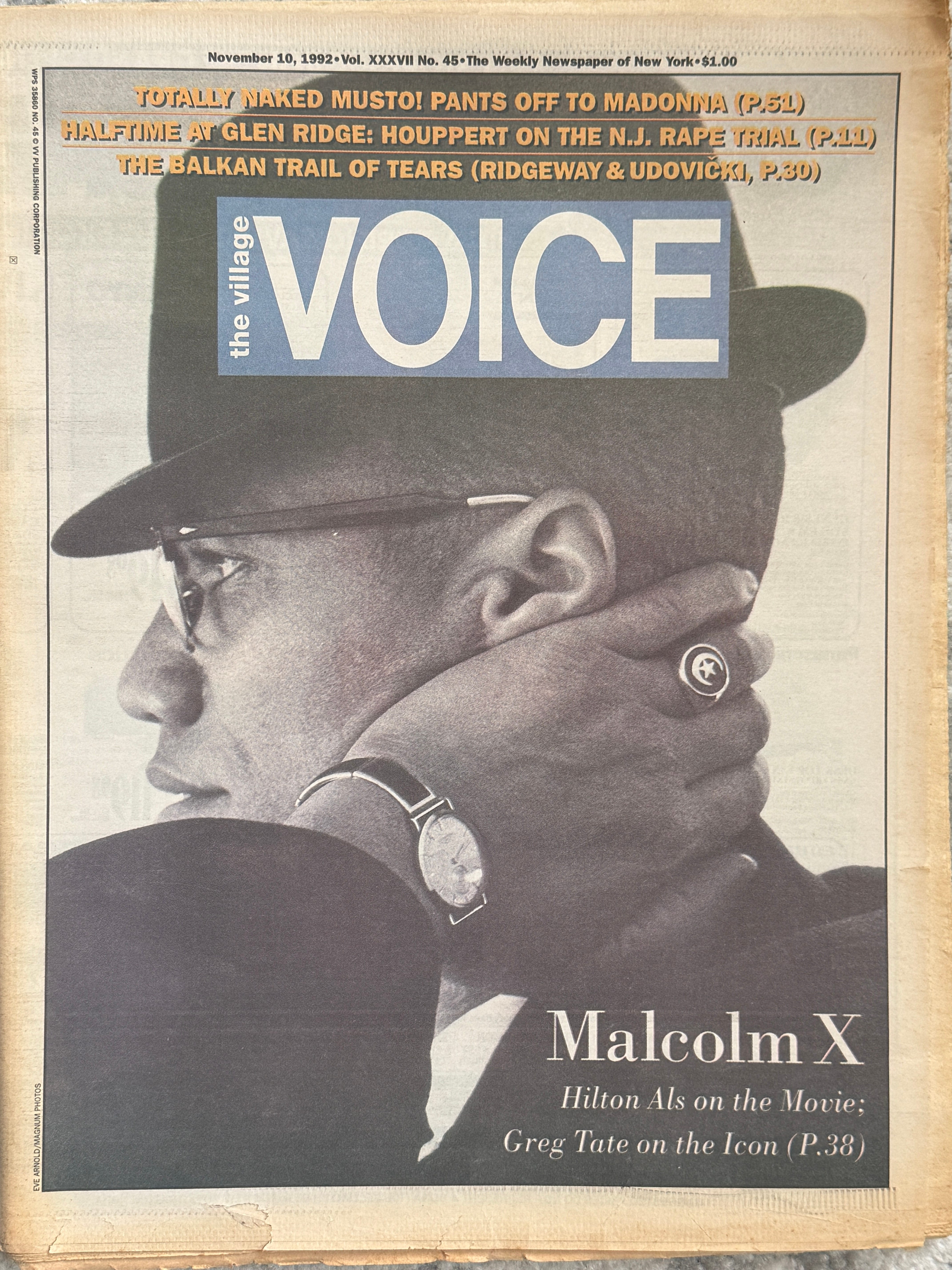
How do you explain the density of another era? Reading the Village Voice always felt like entering some spirited conversation part way through. Maybe it had kicked off at a bar or in the newsroom, perhaps it grew out of some writer’s private gripe with how a rival had told the story. Newspapers are duty-bound to the day, chasing whatever broke over the preceding ~twenty-four hours. Monthly magazines can be faddish and curatorial, slimming the world down to digest form. A weekly paper like the Voice occupied a unique place in the city landscape, mostly because its reporters, columnists, and critics wrote with such outsized personas, you felt like you were tagging alongside someone’s running thoughts. The most famed writers were even given billing on the cover. They were polemical and wonky, gumshoes and poets, hungry disciples eager to try on styles, cranks and absolute nerds, and collectively, they chronicled all that makes living in New York overwhelming and worthwhile.
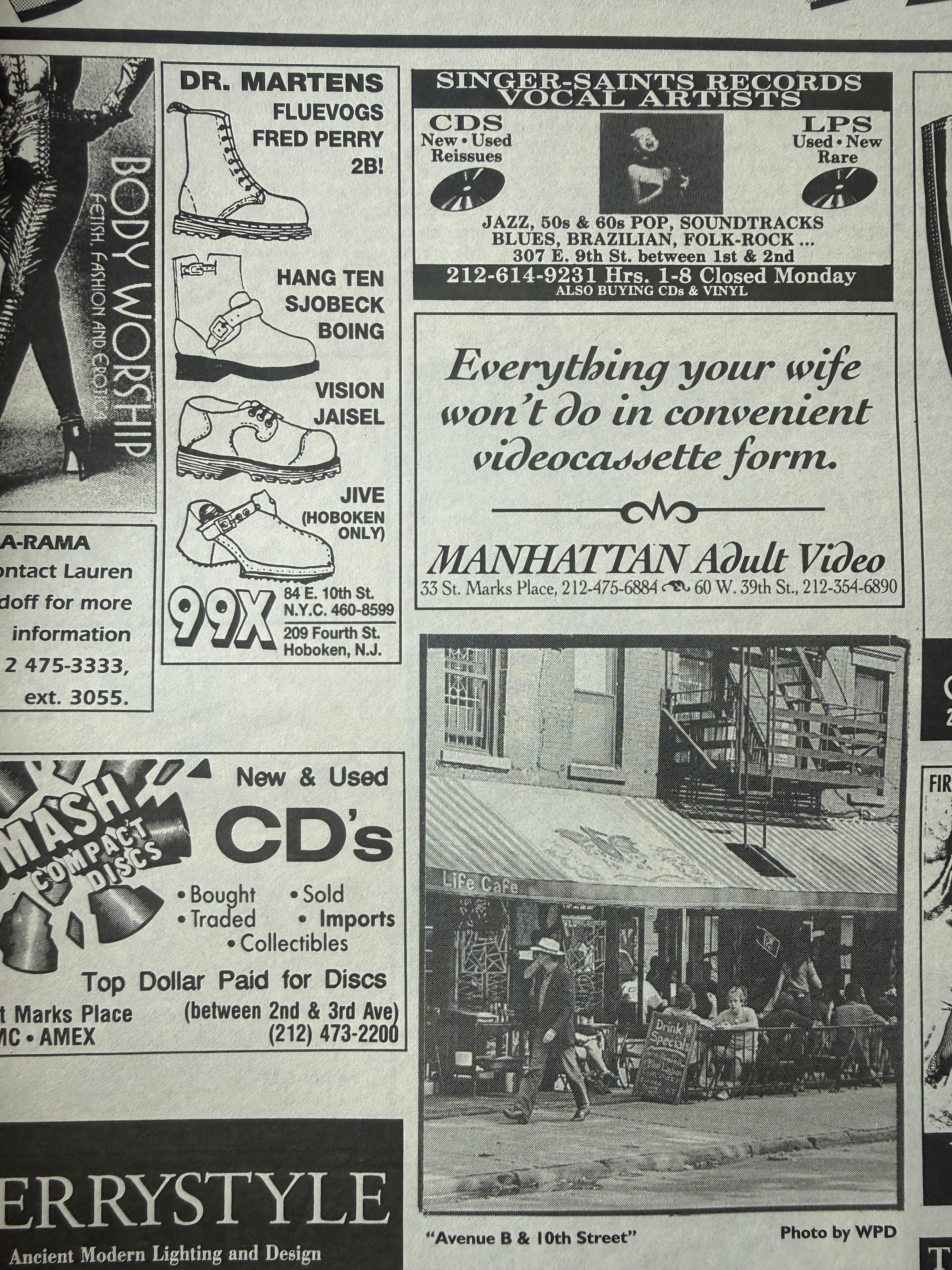
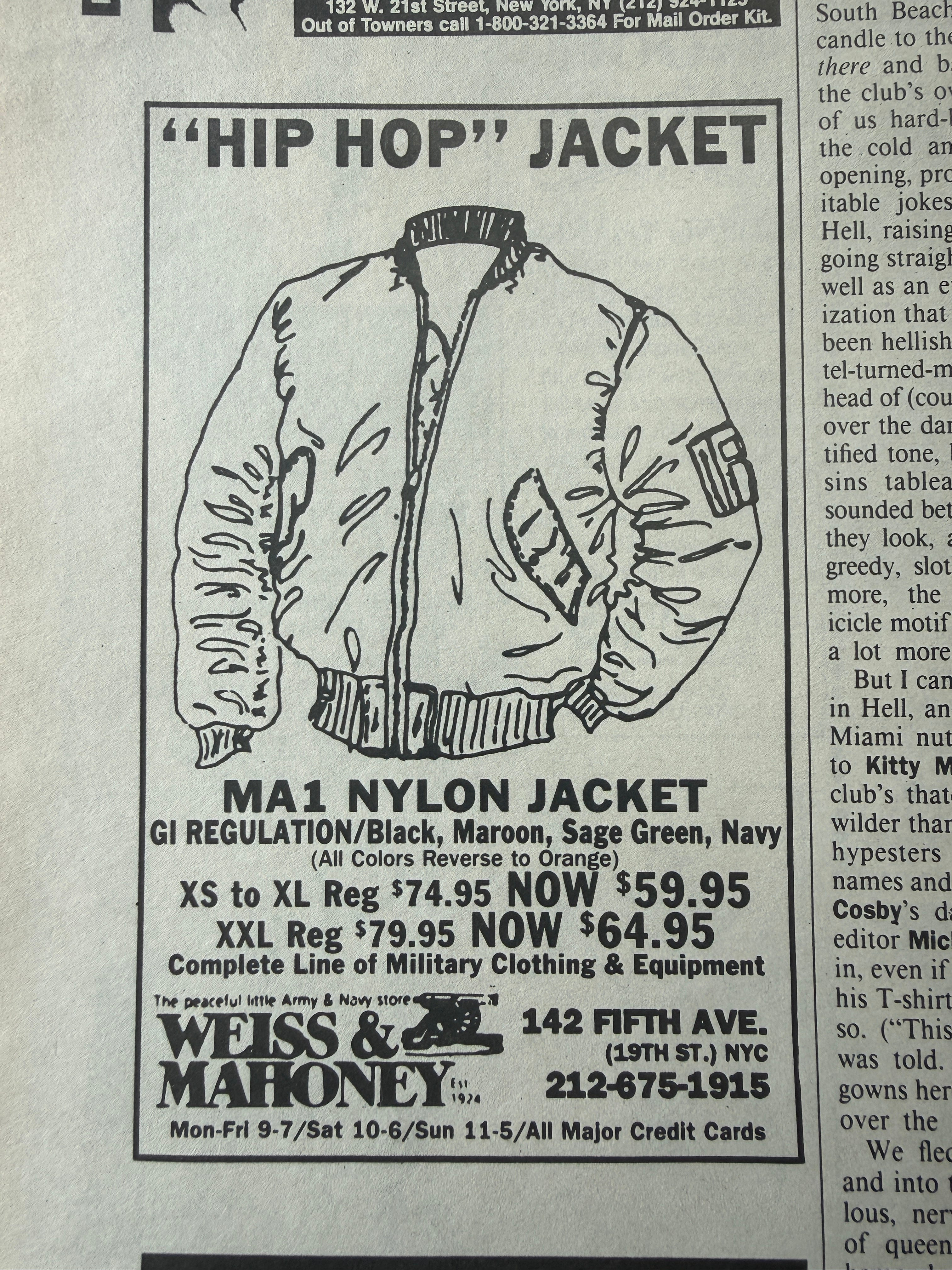
I was not reading the Village Voice in 1992. I was fourteen when Spike Lee’s Malcolm X came out, which means I probably learned about one of the most consequential people of the twentieth century at a movie theater. I was faintly aware that there was some controversy surrounding the film, but the main trickle-down effect over in my Silicon Valley suburb was a sudden preponderance of “X”-branded gear. So much so that I mistook a classmate’s “Y” (Yale) cap as defective, like a knock-off Adidas missing a stripe. We were not wearing “‘Hip Hop’ Jackets” in the South Bay.
I don’t remember where I got this issue, but it was surely because of the cover. “Representation” is such a meek bummer of an idea nowadays, in part because it got whittled down to something toothlessly cosmetic. But the nineties/early-two-thousands Voice (as I understood it) was a funky place with an aggressively multi-everything cast of characters, where editors would quarrel (and occasionally fight) in the office and then show up the next day to do it all over again. Part of the thrill of the Voice was its range of styles and, uh, voices. Here, Hilton Als and Greg Tate weigh in on The Malcolm X Discourse of 91/92 in wildly different ways. I’m amazed by the ambition of Hilton’s piece—he’s not just reckoning with Spike, he’s writing against the hail of bad faith thinkpieces that only saw Spike/Malcolm as avatars of black anger. There are various writerly moves that would feel generic or time-waste-y in lesser hands. The piece opens as Hilton enters the Odeon, where they’re set to have dinner. He spends ~a thousand words contextualizing Spike, dissecting mainstream representations of his swagger, and theorizing his unique celebrity, before he even gets to the table, where the stern director is waiting for him.
The piece’s challenge is two-fold, dissecting the flattening of Malcolm into symbol while the same thing was happening to Spike. So he collects voices in his orbit, and these moments are as interesting as the ones starring Denzel. “No one will really talk to you about Spike. Why should they? Let’s face it, Spike is a power,” an insider tells him. “You have to know he’s tried to make it about Malcolm, but he couldn’t. That particular bit of subject matter is his biggest competition in the black attention market.” Als hang out on set during a long shoot at the Museum of Natural History, noting the tedium of moviemaking. Spike isn’t actually the story, even if Als is impressed by his quick problem solving. It’s the P.A.s and aspirants who whisper in his presence, the jaded “young woman sitting by a pool in L.A.” who randomly pops up near the end—she’s bored with the town and roots for Spike to “tear the roof off of this one.” Back at the museum, a young man walks with Als “past the museum’s great hall, past the aimless techies and gofers—primarily black—circling the floor or sometimes sitting dazed and huddled on it, X hats discarded here and there, X jackets used as pillows for those who had been felled by the re-creation of history, or making of it.”
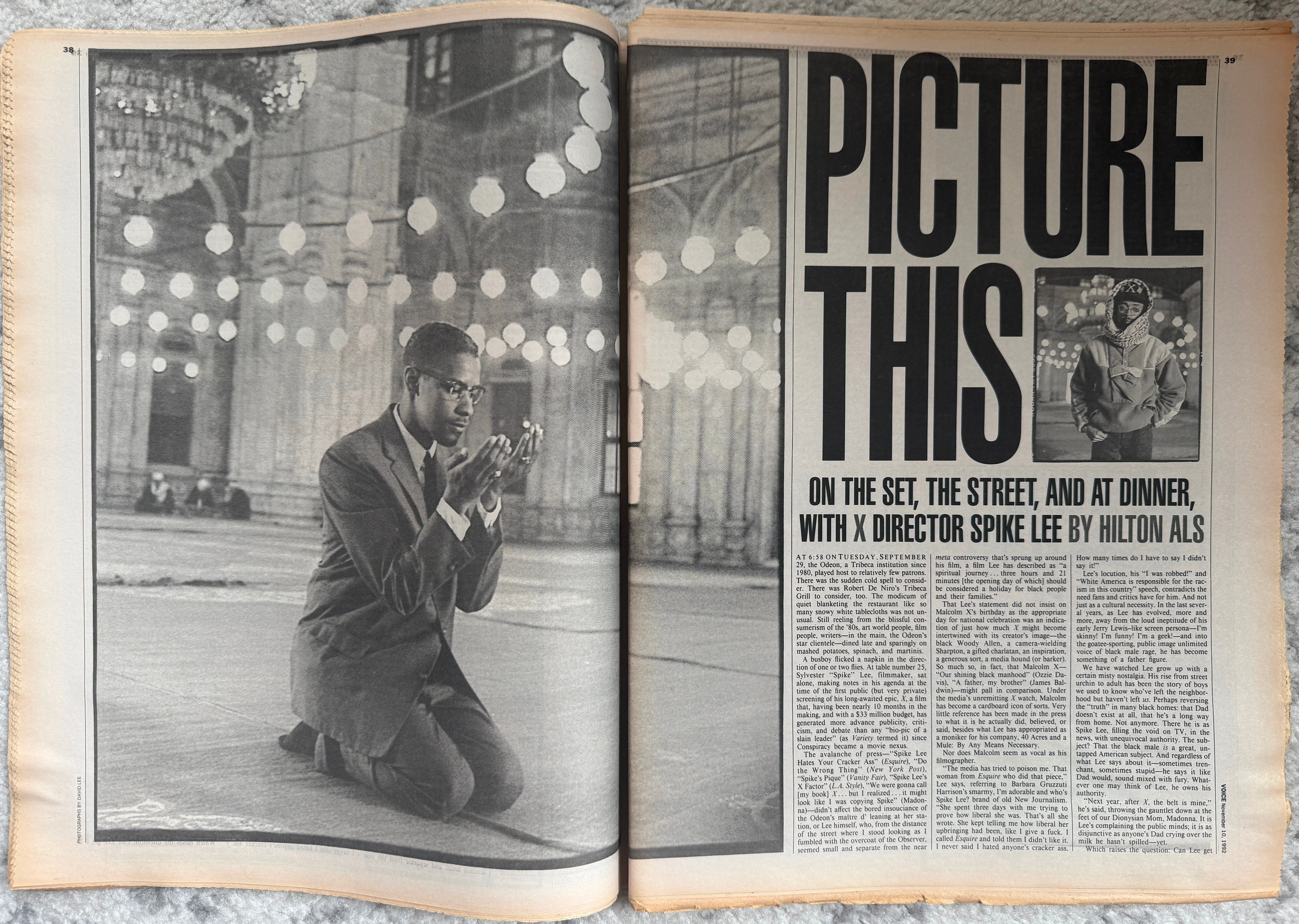
Spike doesn’t say anything particularly interesting, but Als is so attuned to how the director moves through the world, which is the focus of the piece. What is it like to become an icon? There’s a brusque tenderness to the director—who is “excellent at projecting a tone of voice that conveys mock umbrage and other aspects of Dad/boss man disapproval”—as he needles Als for being tardy. Even by the end, Spike—”noticing everything and saying nothing”—remains wary of appearing vulnerable. But Als sees that he is just flesh and bones, tired of being a surface for projection. At one point, he fixates on the director’s earring and feels tempted to reach out and touch his earlobe.
Alongside Als’ profile is a legendary Greg Tate piece meditating on Malcolm’s appeal to his generation. As I’ve written about in the past, I’m one of the many people whose lives were changed for the better upon reading Greg. I knew this piece, just not where it was originally published. He imagines a debate between two former lovers, Bullrose and Dravidiana. Bullrose is full of theories and philosophies, relating Malcolm to the X-Men and Big Daddy Kane, the appeal of ”the brother or sister who can make stone rhetoric swing like a pickax to the brain.” Dravidiana listens patiently and keeps his “masculinist” B.S. in check.
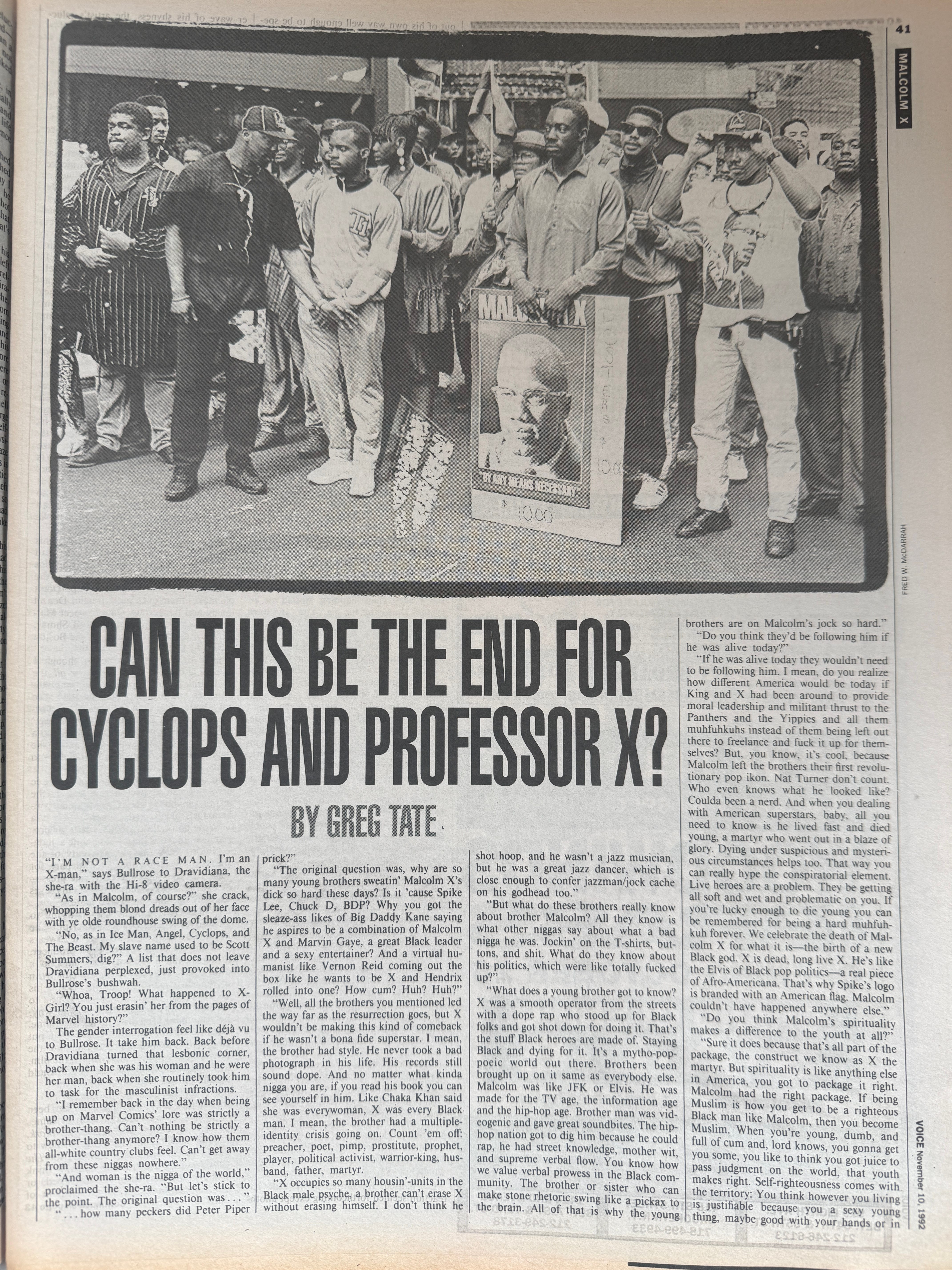
Bullrose muses: ”Live heroes are a problem. They be getting all soft and wet and problematic on you. If you’re lucky enough to die young you can be remembered for being a hard muhfuhkuh forever. We celebrate the death of Malcolm X for what it is—the birth of of a new Black god. X is dead, long live X.” Dravidiana waits until he finally asks what she thinks, which takes a while. She doesn’t disagree but is wary of idle worship. True liberation starts with women.
These were clearly versions of people Greg knew in real life, conversations he’d had with his own friends, and that sense of community is what made his writing so special. Why not just quote your friends, who are just as smart as the so-called authorities or experts? Reading the Voice, you always felt that you were reading writers who had a stake in the city and its people—who saw the characters in their orbit as worthwhile of worship as anyone. There’s Guy Trebay reporting from Crown Heights, still reeling from the previous year’s riots, quoting anyone who will answer his questions. Richard Goldstein writes of Marsha P. Johnson, the activist, performer, and “Saint of Christopher Street” who had passed a few months earlier. Goldstein’s piece is a tribute as well as an early investigation into the circumstances around her death, which the police had classified as suicide. He wrote knowing of her “sunflower smile,” the way she “worked the bars, intoning, ‘Spare change for a dying queen?’ In that clone zone, he* was a Watts Tower of couture—a mixed metaphor with no intention of inhabiting any category for long. When marching at the head of the Gay Pride parade, Marsha wore a business suit. When visiting his family in Brooklyn, he’d chill till everyone kissed goodbye and then break into an explosive swish.” (*Goldstein uses male pronouns, which I guess would have been typical in 1992?)
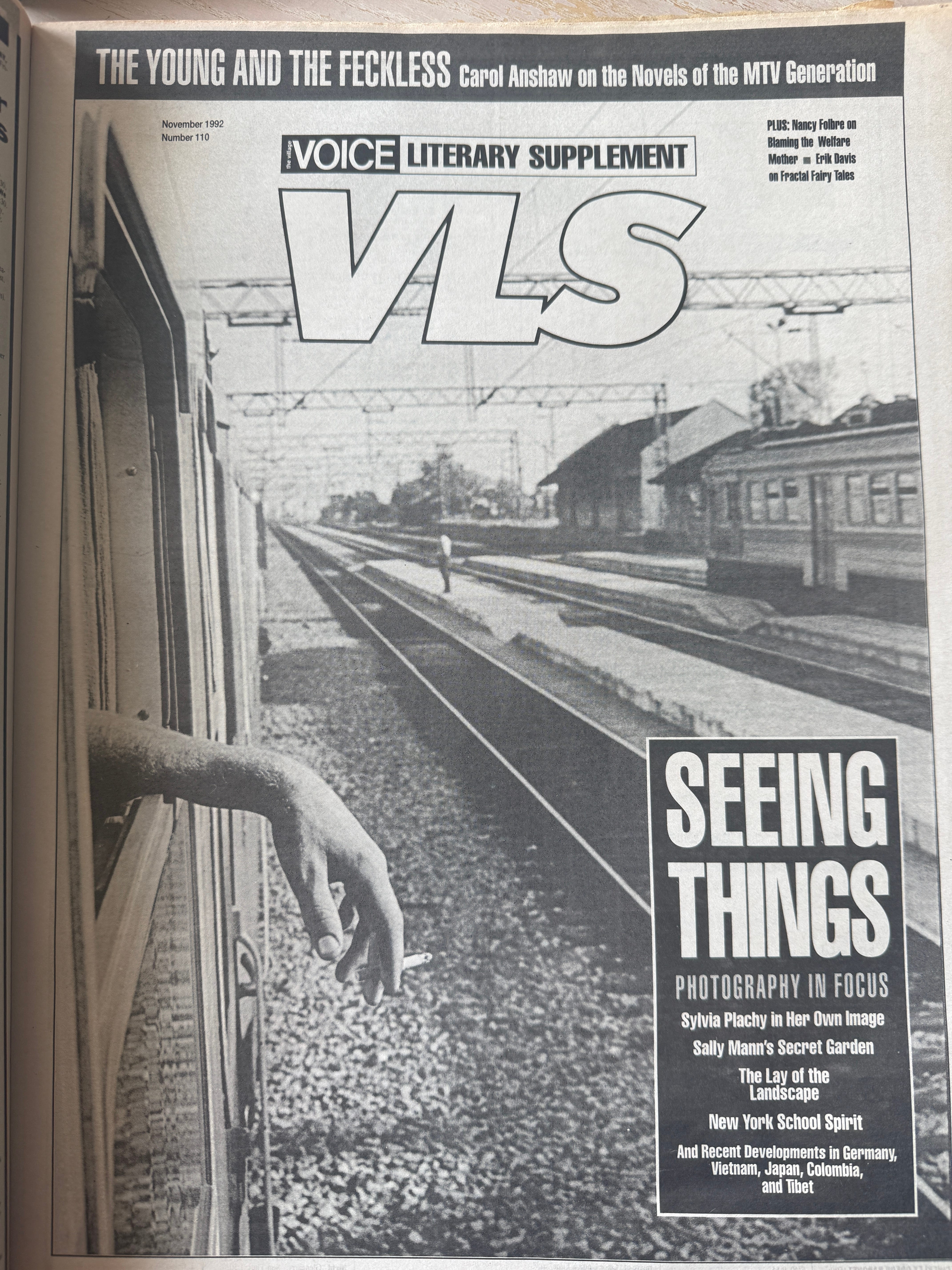
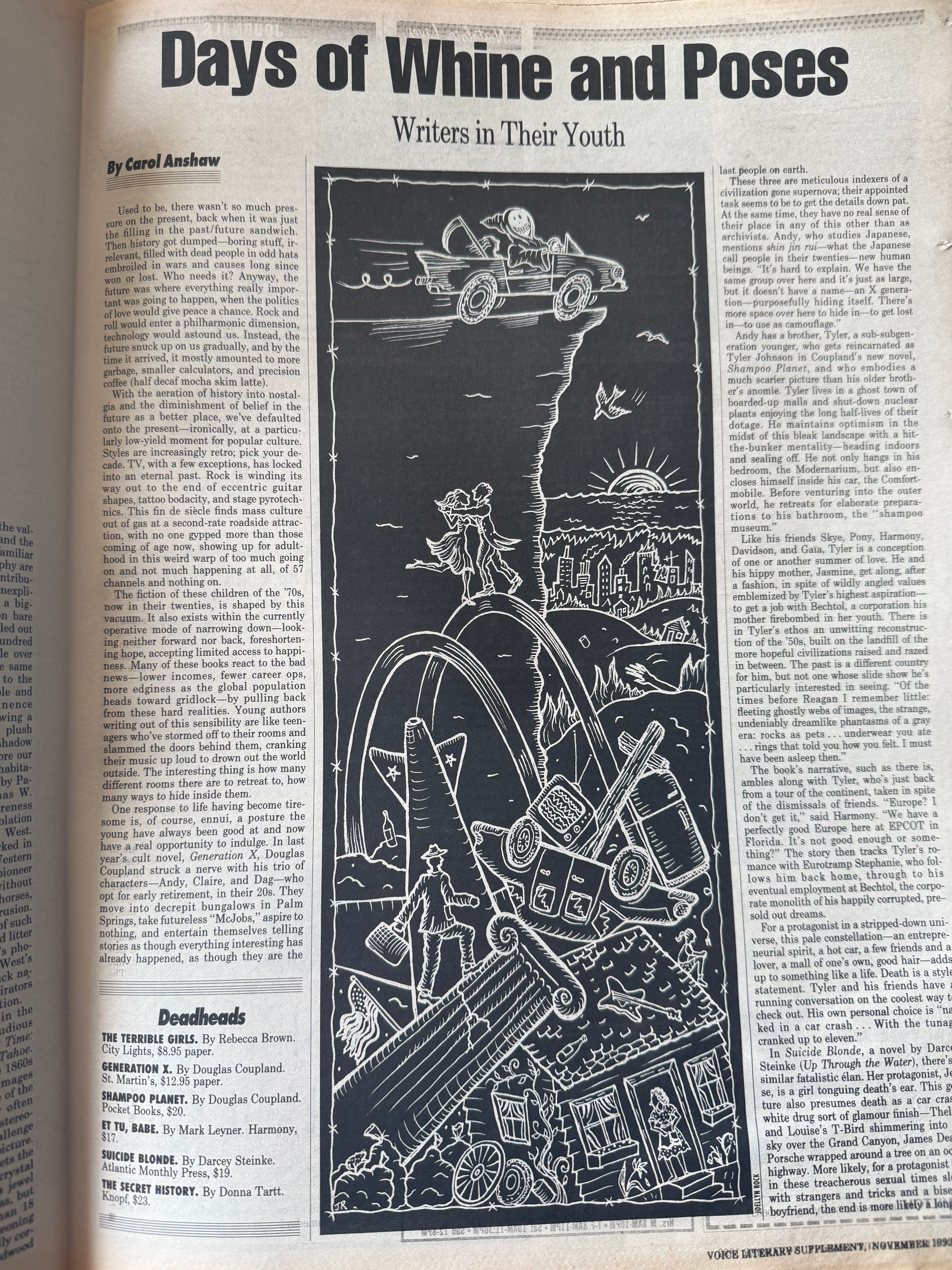
This issue also happened to feature the Voice Literary Supplement, a monthly pullout edited by old friend/Vassar office neighbor M. Mark. One of the big essays is Carol Anshaw’s attempt to diagnose The Current Situation via the McNovels of the MTV Generation, everything from Douglas Coupland’s Generation X to Donna Tartt’s The Secret History. I always love big, ambitious attempts to describe life circa whenever. A reminder that the discerning critic will always write from a place of alienation. “(T)he future snuck up on us gradually,” she writes, “and by the time it arrived, it mostly amounted to more garbage, smaller calculators, and precision coffee (half decaf mocha skim latte).”
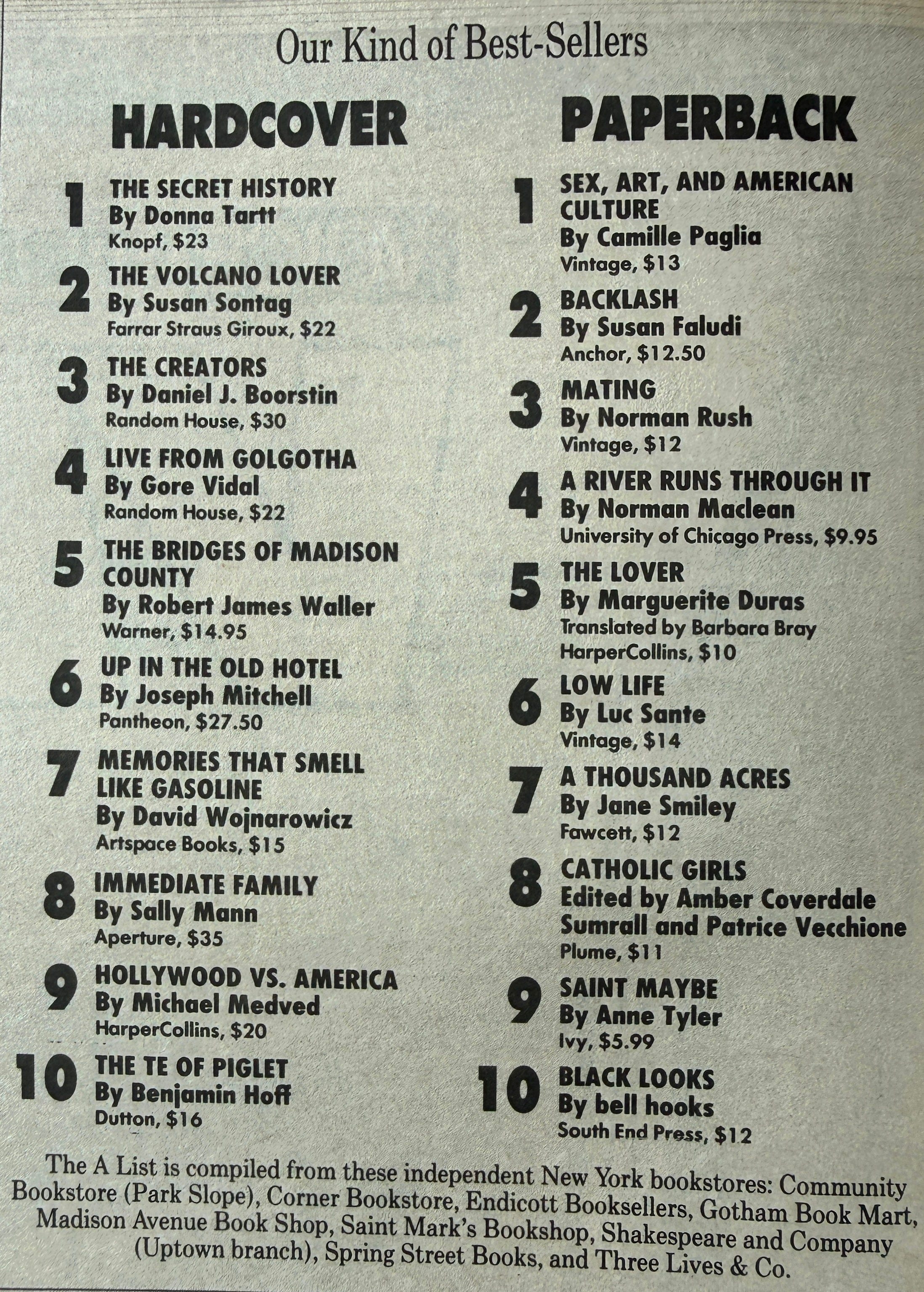
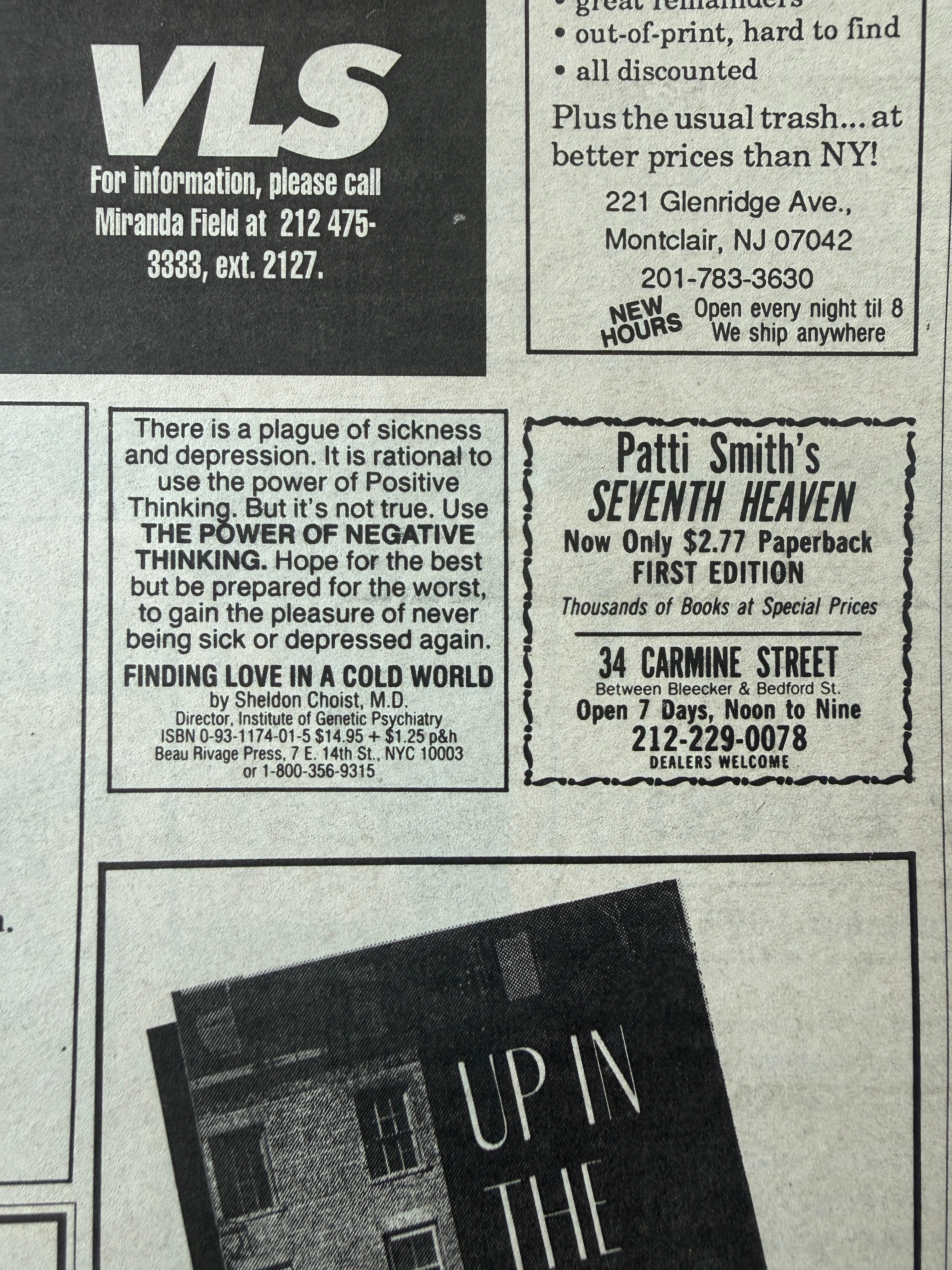
It’s hard to believe there was ever a time before Joseph Mitchell’s Up in the Old Hotel, but it had just been published that year. These are some great best-seller lists…
You can read the Malcolm X pieces online on the zombie Voice’s current website, and perhaps the other stuff is online too. The site is hard to navigate or look at for too long, another publication that never understood the value of its archives.
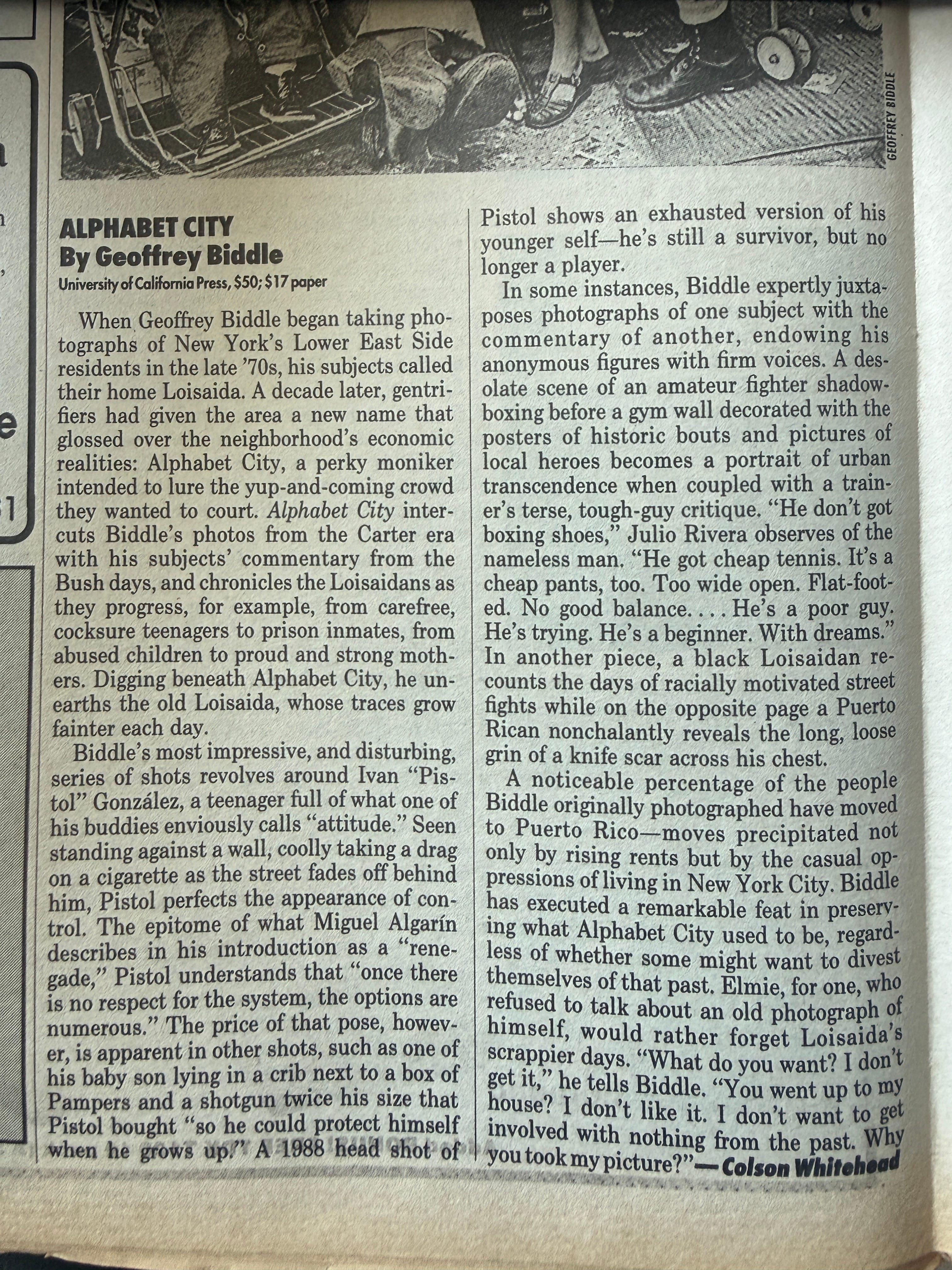
I started writing for the Voice in the early-two-thousands and then abruptly stopped writing for/reading it after the New Times acquisition in 2005. When I broke in—I owe you everything, Ed!—the Voice felt like it could be a stepping stone or a destination, it really didn’t matter. You could aspire to be folded into this gang, or you could find a different, less fun one; there were many forms a career might take. Reading through this issue, I can feel the excitement of younger writers at the start of their journeys, finally given a few hundred words to stretch out. Manohla Dargis reviews Andrew Behar’s Painting the Town and here’s Colson Whitehead on Geoffrey Biddle:
Later, when I started getting work from a prestigy newspaper, I was discouraged from writing in a way that was “Voice-y.” I understood what they meant. People turned to the paper for a kind of omniscient authority, not personality. But the Voice is where I learned about rhythm. There were at least two editors who would read a piece aloud to you back over the phone, just to make sure yr sentences syncopated just right. We were all writing for each other.
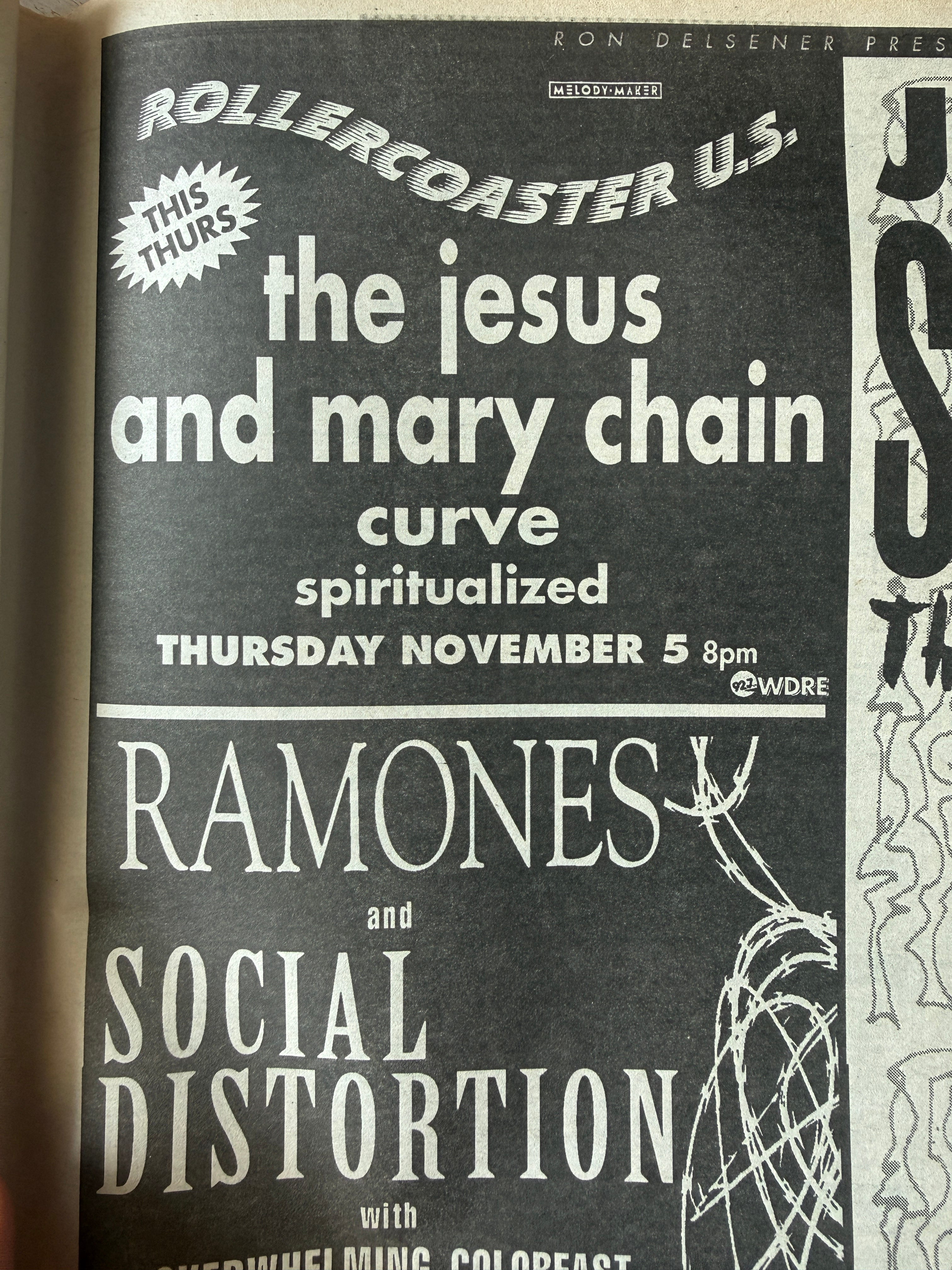
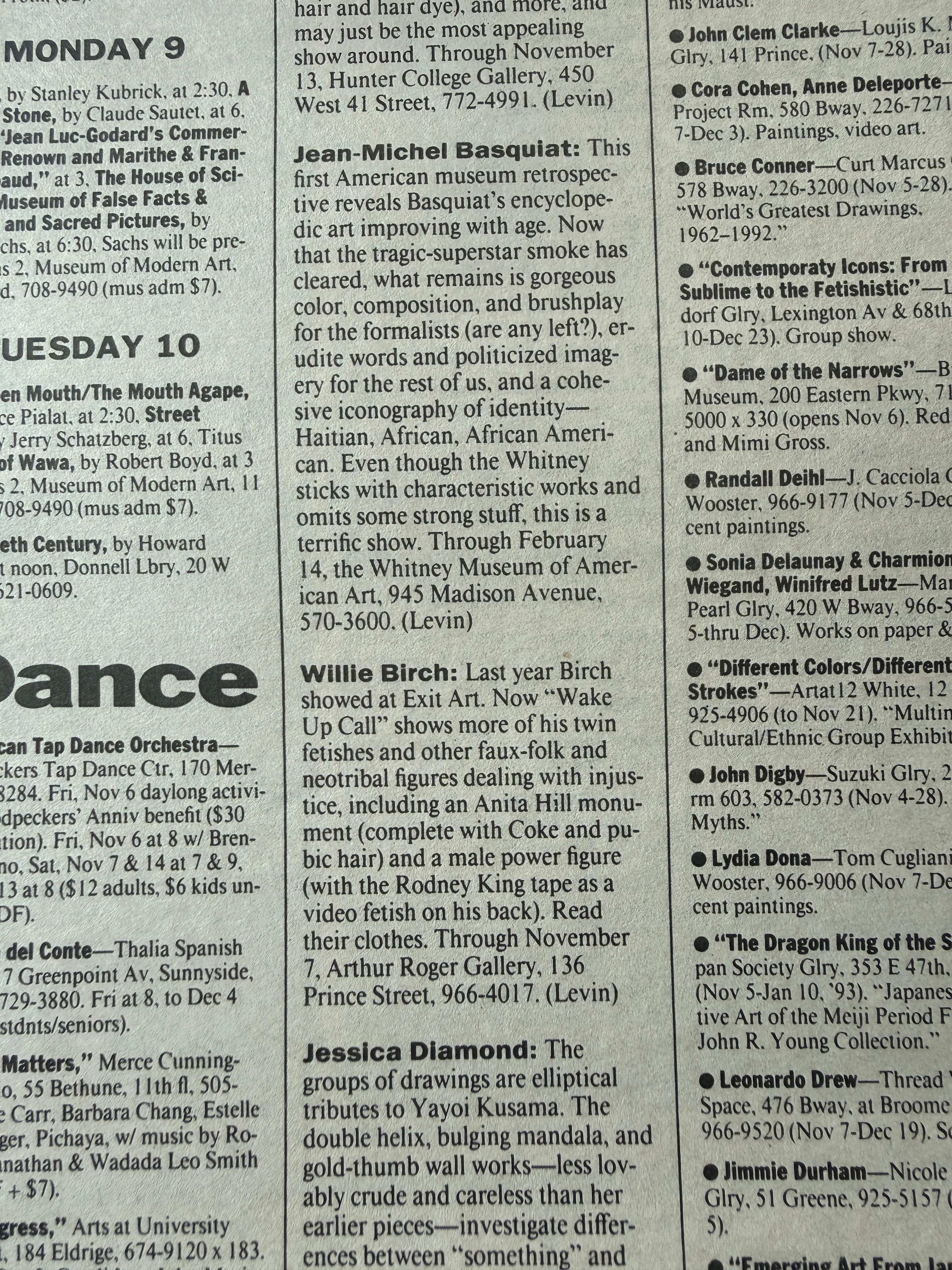
Nowadays, we are led to believe the Internet has “everything,” yet search engines are so cooked that I fear how thin future generations will perceive the historical past. How can we historicize that feeling of a different time’s possibilities? I forget how overwhelming a single issue of the Voice could feel—this one is nearly 200 pages, including the VLS. I’m sure a lot of people like “doing their own research” and whatnot, but what can we really do with the non-stop torrent of information? I used to rely on magazines for this. The conspiracy is that we’re made to feel that the only way to moor ourselves is through ever more technology, some “helpful” “assistant” truncating everything into tl;dr bites.
But this used to be a normal feeling, this navigation of small worlds that defied immediate comprehension. These were regions I was desperate to find my way into. There are few pleasures I miss quite like grabbing a fresh copy of the Voice from one of those red newsboxes and mapping out my week over coffee.
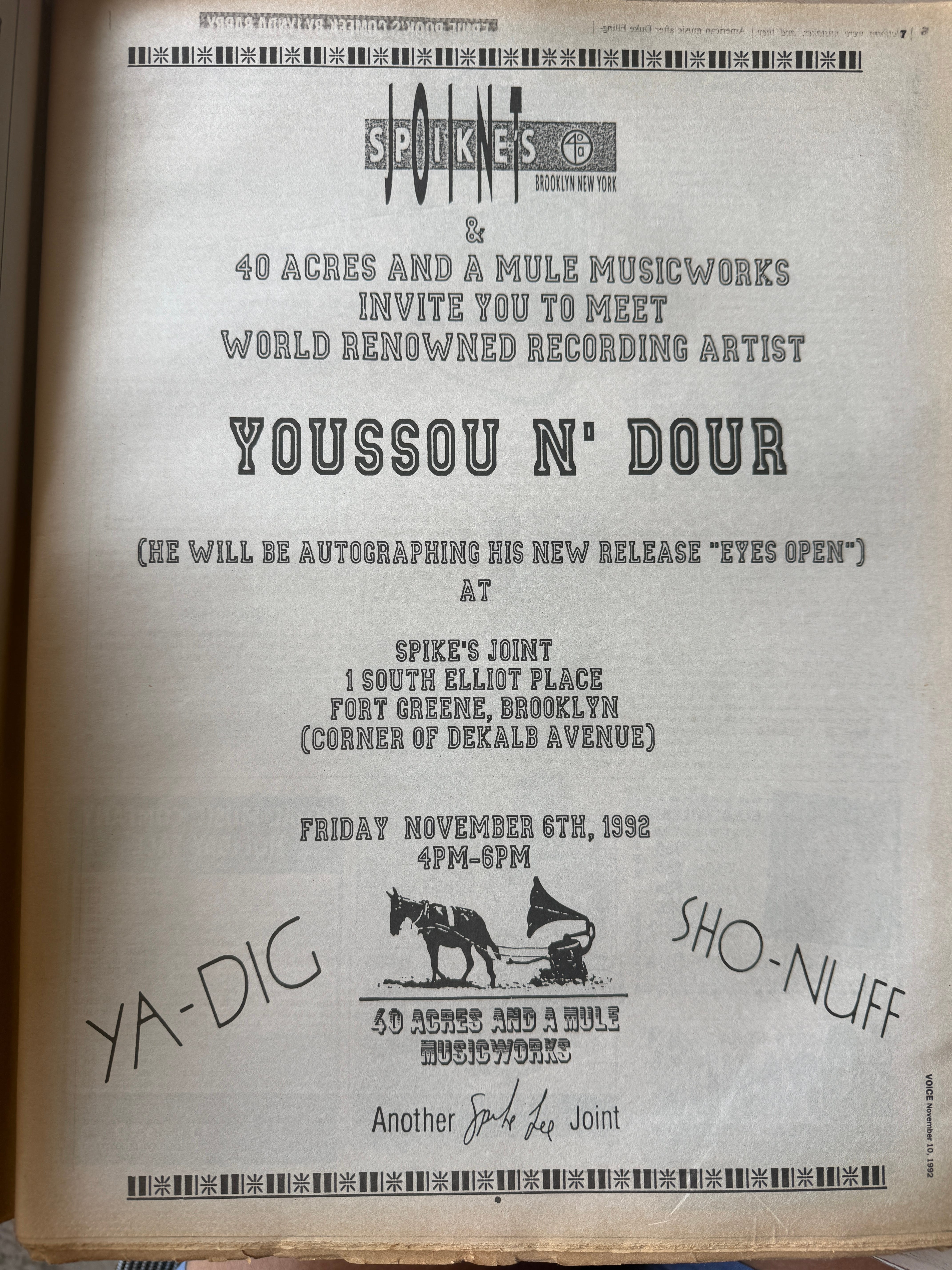
Greg Tate was one of the first people I sought out when I landed on the East Coast, as I tested out a 2.0 personality that was less shy and more open to awkwardness or risk. We met at a place called Kate’s that the 2026 Internet seems bent on convincing me never existed. I always found him intimidating—it was a me thing, not anything he was putting out. He was an icon, and he was flesh and bones. I’d run into him in the city, I’d go to his shows. I’d try out some dumb perspective on “universal beauty” to see what he thought, then we’d part ways, comfortable with the thought that another chance encounter was just around the corner. On New Year’s Eve 2004 or 2005, I was hunched over a subway grate, trying in vain to fish out a pair of keys, when I saw him walk by. “Greg!” I exclaimed. “What are you doi…” he started, and then chuckled. “Good luck with that.” He showed me that other worlds were out there, you just had to find them. Or maybe you had to invent them, piece them together in your imagination, walking through the city, catching bits of stranger wisdom and thinking about how deep the X-Men were, a world you brought into this one through writing.
***
[[[Coincidentally, FSG/AUWA has just republished Greg’s classic classic classic Flyboy in the Buttermilk. Don’t sleep on Flyboy 2, a Duke University Press collection of later works.]]]
I love thinking about your words, about Tate’s, about being in conversation, about lived lives and flesh bodies, and about red boxes. Deeply, indescribably thankful.
Loved this thank you for sharing these pieces and memories